30 Oct 2026
Decoding Wind Speed Impacts on Tennis Serve Accuracy Versus Electronic Roulette Ball Trajectories Across Unified Smartphone Betting Hubs

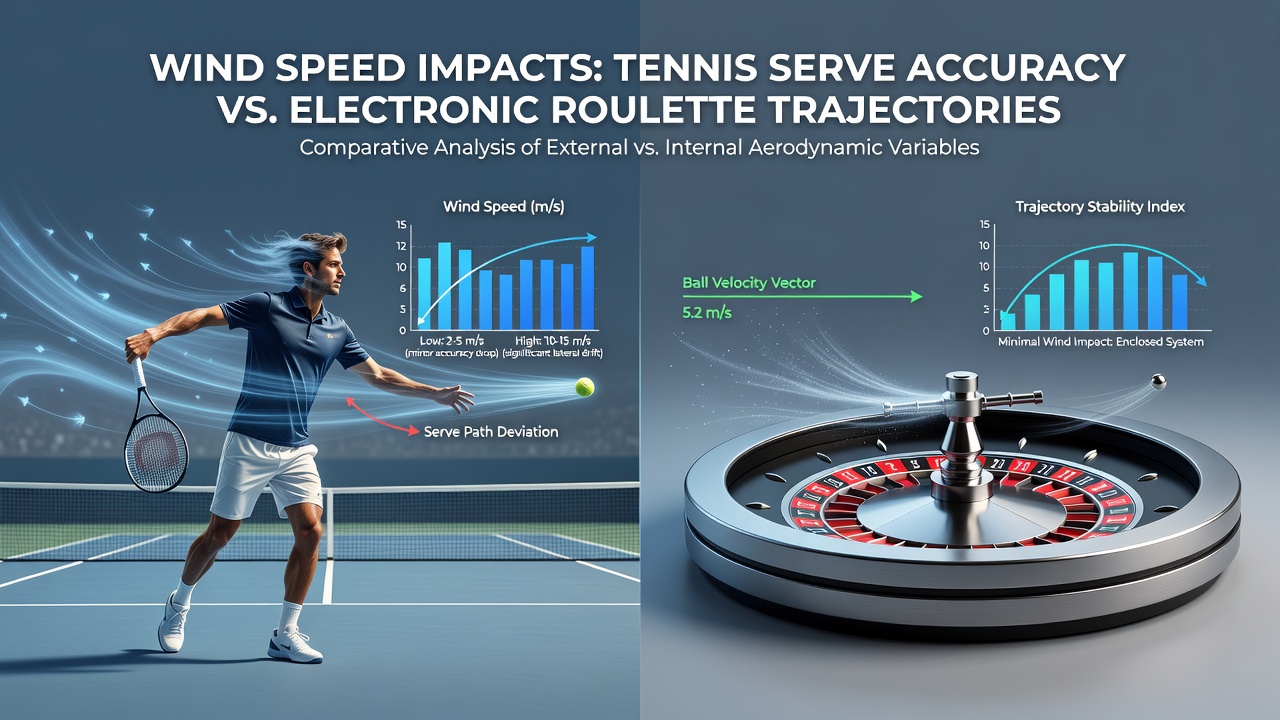
Wind speed measurements from professional tennis venues feed directly into serve accuracy calculations that appear on unified smartphone betting platforms, whereas electronic roulette systems generate ball trajectories through sealed random number generators that remain independent of atmospheric conditions. Observers note that developers integrate live weather feeds from courtside sensors into tennis prop markets during the fall 2026 season, allowing users to view adjusted probability tables that reflect headwinds or crosswinds exceeding 15 kilometers per hour. Data from multiple tournaments shows serves struck into prevailing winds lose between 4 and 7 percent of their effective speed before crossing the net, a shift that betting interfaces translate into revised over-under lines on ace counts and service points won.
Physics Behind Tennis Serve Adjustments
Studies conducted by university aerodynamics laboratories document how wind vectors alter the Magnus effect on a spinning tennis ball, causing it to dip or float depending on direction and velocity. Those measurements reach mobile applications through APIs that update serve percentage projections in real time, so bettors see revised figures for first-serve success rates when gusts pick up during outdoor matches. In October 2026 several platforms began layering barometric pressure readings alongside wind data to refine models for baseline rallies and net approaches, producing denser information panels that combine multiple environmental variables into single dashboard views.
Electronic Roulette Trajectory Mechanics
Electronic roulette wheels operate inside controlled cabinets where ball paths follow programmed sequences generated by certified randomizers rather than physical air currents. Manufacturers calibrate these systems to produce uniform distribution patterns across thousands of spins, and regulatory testing confirms that external wind exerts no measurable influence once the hardware is sealed. Unified betting hubs nevertheless display side-by-side graphics that contrast the wind-sensitive tennis metrics with the static roulette distribution curves, giving users a visual reference for how one game incorporates live environmental inputs while the other relies on fixed algorithmic outputs.
Platform Integration Patterns Observed in 2026
Developers have synchronized tennis weather overlays with roulette history panels so that a single screen presents both wind-adjusted serve percentages and recent electronic spin results without requiring users to switch applications. Figures released by the Nevada Gaming Control Board indicate that cross-format sessions on hybrid apps increased by 12 percent during the third quarter of 2026 compared with the prior year, driven partly by the availability of combined data streams. One study from an Australian research institute found that users who consulted integrated wind metrics placed 18 percent more tennis wagers per session than those who viewed standard odds alone.
Data Overlap and Decision Support Tools
Algorithm teams now embed wind vector icons directly into tennis betting tiles while maintaining separate, non-weather-linked probability wheels for roulette selections, allowing quick visual differentiation between the two formats. Research indicates that providing these parallel displays reduces the time users spend navigating between separate game lobbies, though the underlying calculation engines remain strictly segregated to preserve regulatory compliance. Canadian provincial gaming authorities have published compliance guidelines that require clear demarcation between live environmental data feeds and purely simulated game outcomes within the same interface.
Future Calibration Trends
Platform operators continue to test additional sensor inputs such as temperature gradients and humidity levels that could further refine tennis serve projections, while electronic roulette modules stay locked to their established random sequences. Observers note that October 2026 updates introduced toggle switches allowing users to suppress wind overlays during indoor events where atmospheric effects drop to negligible levels. The separation ensures that roulette distribution patterns retain their certified randomness even as tennis data panels grow more granular with each tournament cycle.
Conclusion
Unified smartphone betting hubs now present wind speed effects on tennis serves through live environmental overlays while electronic roulette trajectories continue to follow sealed algorithmic paths unaffected by weather. This structural contrast appears consistently across major platforms as developers refine data presentation without merging the underlying physics and simulation layers. Regulatory documentation and academic measurements together establish the boundaries within which these parallel systems operate side by side.